Ethical & hands-on
Every tour we run includes time at an elephant sanctuary, and it is the part people talk about for years afterwards. Not from a viewing platform — in the river, with the herd, hands covered in mud.
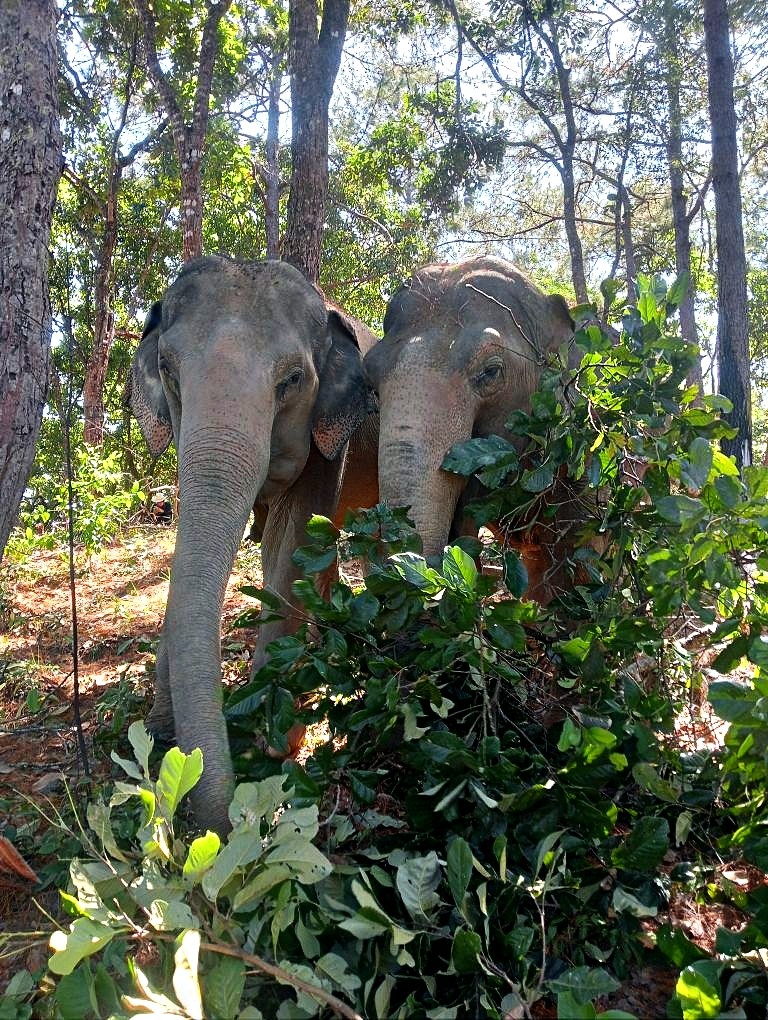
There is no riding. There are no performances, no painting, no football. Elephants that have come out of logging camps and trekking outfits spend their days in forest and river doing what elephants do, and visitors fit around that rather than the other way round.
The practical difference is visible the moment you arrive. A sanctuary built around riding has saddles, chains and a queue. One built around the animals has open ground, mahouts who have worked with the same elephant for years, and a herd that moves when it wants to.
You start with bananas and sugar cane, a basket of it, and an elephant that has worked out exactly where the basket is. They take fruit with the tip of the trunk — surprisingly delicate for an animal that can push over a tree — and the trunk will find your pockets afterwards.
This is where most people lose their nerves. Ten minutes in, the size stops being frightening and becomes something else.
The bathing is the part that ends up on everyone's camera roll. You go into the river with them, buckets and brushes, and they roll. Elephants enjoy water in a way that is impossible to misread, and a bathing session usually ends with everyone considerably wetter than planned.
Bring clothes you do not mind soaking. Most people change afterwards and carry the wet set home in a bag.
Every elephant has a mahout, often for the animal's whole working life. They know their elephant's moods, which ones are patient with visitors and which want left alone that day, and they will tell you plainly. Listening to them is the difference between a good day and an incident.
Our guides translate, so you can actually ask questions rather than nodding along. Where an elephant came from, how old she is, which of the herd she will not tolerate — the answers are usually better than the brochure.