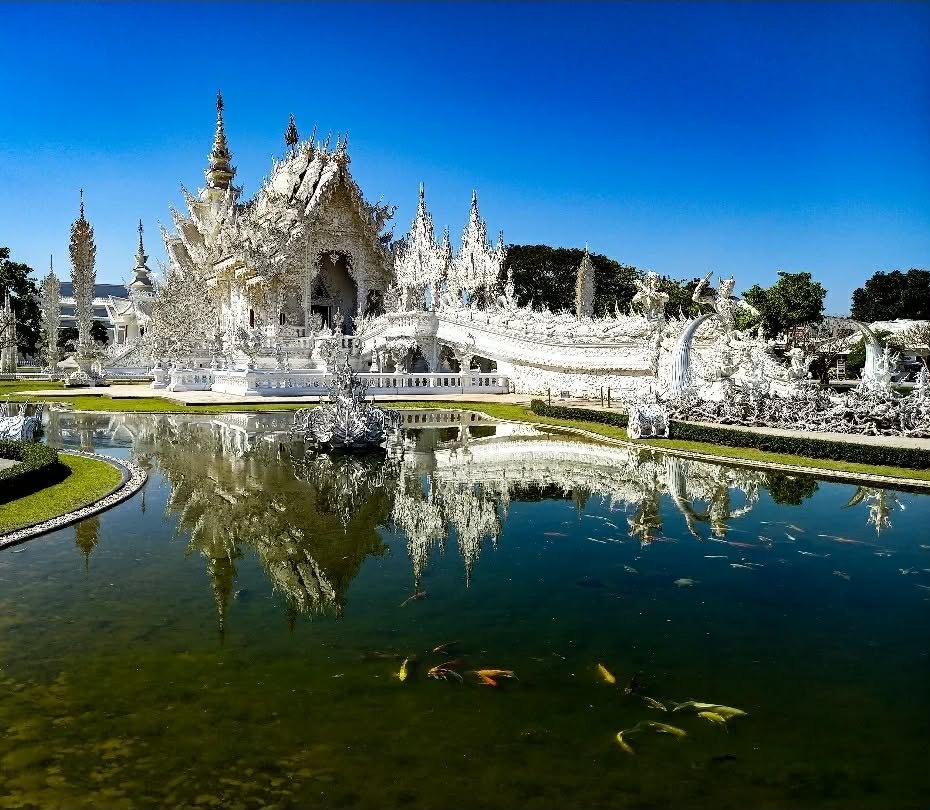
A day over the border of the province
Three hours north of Chiang Mai is a province where contemporary artists have been building temples for forty years, and the results look like nothing else in Thailand. It is a long day and worth every hour of it.
Chalermchai Kositpipat began the White Temple in 1997 and it is still not finished; he has said it will take decades more. Every surface is white plaster set with mirrored glass, so the whole structure throws light back at you.
You cross a bridge over a sea of reaching hands to enter — the artist's image of desire and hell — and inside the murals are not what you expect from a temple at all. It is a genuinely strange building and the strangeness is the point.
Built on the site of an abandoned temple and finished in 2016, the Blue Temple is sapphire and gold from the ground up, painted by a student of the White Temple's architect.
Inside is a tall white Buddha that seems lit from within against the blue. Photographs undersell it; the colour does something in person that does not survive a screen.
Thawan Duchanee's Black House is the counterweight to the White Temple, and the two are usually visited together for exactly that reason. Dark teak buildings filled with animal bones, hides, horns and furniture made from them.
It is not a temple and it is not to everyone's taste. It is also impossible to forget.
The hot springs sit roughly halfway and make a natural break on the drive. Geothermal water hot enough to cook eggs in — which people do, and you can buy them at the side — and pools to soak your feet.
After three hours in a van it is a better stop than it sounds.